Seven Dieting Myths
Every year there are new trends and updated suggestions for healthy eating and weight loss. Some are simply useless and others can be counterproductive. After reading about many of these trends, we came across an excellent article from Refinery29 that was re-posted on The Huffington Post . It embraces the Heels to Laces way of life: avoid fad diets and instead live a healthy and balanced lifestyle. We have posted a portion of the the article below:
As a culture, we go through phases with our diet preferences — low-fat gave way to low-carb, dairy-free begat gluten-free, and eggs (poor eggs) are either omega-rich wunderkinds or insidious cholesterol bombs depending on the current political climate and whether or not Mercury’s in retrograde. Yet, there are some out-there diet myths that we simply can’t seem to shake.
Myth #1 You shouldn’t eat dinner (or anything else) after 7 p.m.
“There is no universal time that everyone should stop eating,” says Kinsella. “People get up at different times, go to sleep at different times, and eat at different times. Many countries eat dinner later than Americans but their populations weigh less than Americans do. Unless someone has an eating disorder and needs to eat at regular intervals to establish normalized hunger cues, or someone has a self-care reason for eating (like they’ll soon be stuck in a meeting without access to food), it is more important for people to be connected to their internal hunger cues than to be eating based on an external influence, like the clock.”
What’s even more curious is how this diet myth originated. Kinsella wonders if the don’t-eat-at-night rule may have more to do with how we regulate our earlier meals while dieting. “Some people get in bad cycles of skipping breakfast and then overeating at night,” she says. Furthermore, it’s often not about the time we eat but how we’re eating. “Sometimes, people find themselves late-night snacking out of habit while they’re watching TV. Both these patterns should be addressed simply because they aren’t self-care behaviors. But, non-hunger mindless snacking at 9 a.m. would be just as much of an issue as [it is at] 9 p.m.”
Myth #2 Your body doesn’t need carbohydrates. Carbs make you fat.
Myth #3 Paleo is the ideal diet, because we were all once Paleolithic people.
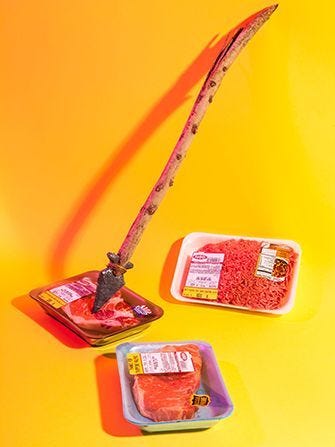
This one particularly irks me. It’s at once so attractive to the dieter (“Of course! Ancient man didn’t have spaghetti, so I shouldn’t, either!”) and so ridiculous (Ancient man didn’t have lentils, and therefore lentils are bad for you?). We also need to acknowledge that we don’t live like ancient man. Consider, for example, that modern produce bears little resemblance to its Paleolithic ancestors. And, hunter-getherer diets varied drastically depending upon where the population lived. Lastly, when is the last time you actively pursued your steak before eating it?
No matter how healthy we aim to be, most of us will not continue an eating program if it doesn’t satisfy us. And, Kinsella warns, “the Paleo Diet certainly doesn’t emphasize enjoying your food. When people don’t enjoy their food, it’s difficult to eat mindfully and it is very difficult to sustain… If we look at the research on losing excess weight, it’s clear that people that include highly enjoyable food are actually more likely to maintain their loss.” In other words, we can put in painstaking dedication and effort to supplement the nutrients that paleo lacks, but the call of the bread or cheese — or even lentils —almost always wins out.“The Paleo Diet is based on eating food that can be hunted, fished, or gathered, such as meat, fish, shellfish, poultry, eggs, veggies, roots, and fruit, like berries. It does not include grains, dairy, beans, salt, and sugar. Whole grains, dairy, and beans are nutrient-rich foods. By eliminating them, you could be setting yourself up for a deficiency or eliminating nutrients that help prevent disease.”
Myth #4: There is such a thing as eating right for your blood type.
“No. There is no scientific evidence to support special diets based on blood type.”
Myth #5: Juicing is healthy and cleansing is necessary.

I think we all know where this is going, but just in case:
“The liver and kidneys are the body’s own detoxification system. They do a fantastic job of continuously removing waste products and toxins without the help of juice. Furthermore, there are some obvious drawbacks of juicing; juices are inadequate in protein, fat, essential fatty acids, and fiber. These nutrients are crucial for satiety and vital components for a balanced meal. The protein factor is particularly crucial here. When protein intake is inadequate, the body catabolizes protein from muscles and organs. Hence, someone on a juice cleanse ends up losing muscle mass — a major contributor to metabolism. They’ll likely end up with a worse body composition in the end.”
Read the rest of the article at
To leave a comment on this article or any other blog entry, please fill in the “Leave a Comment” box under each blog entry on our site: Heels to Laces


